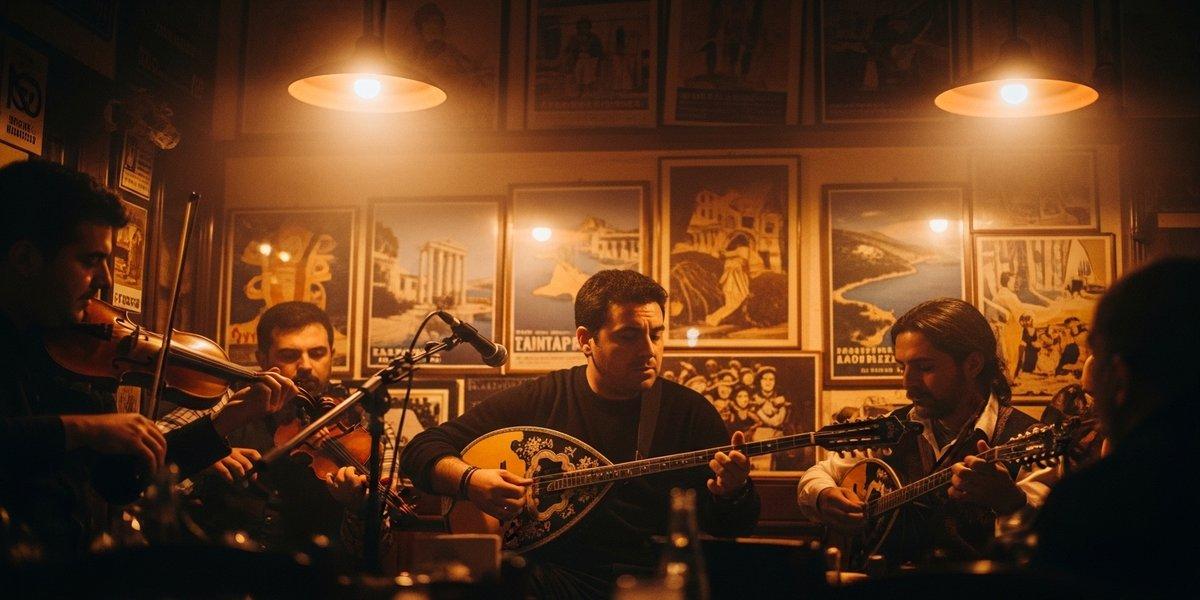
Walk through the Psyrri neighborhood of Athens on any given Thursday night and you will hear it: the sharp twang of a bouzouki, the rumble of a baglamas, a voice that sounds like it has been soaked in retsina and hung out to dry in the Aegean sun. Rebetiko — the urban folk music born in the tavernas, coffeehouses, and hashish dens of early twentieth-century Greece — was supposed to be a museum piece. Instead, it is the hottest sound in Athens.
Origins: The Blues of the Eastern Mediterranean
Rebetiko emerged in the 1920s and 1930s among the Greek refugees expelled from Asia Minor after the Greco-Turkish War. These displaced populations — many of them from Smyrna (now Izmir), Constantinople, and the Black Sea coast — brought with them the musical traditions of a cosmopolitan Ottoman world: Turkish makam scales, Arabic rhythmic patterns, the heavy ornamentation of Anatolian vocal style.
In the port cities of Piraeus, Thessaloniki, and Syros, these traditions collided with the bouzouki — originally a despised instrument associated with the criminal underworld — and produced something new: songs about poverty, exile, drugs, prison, unrequited love, and the particular defiance of people who have lost everything except their dignity. The parallels with American blues are not coincidental; both genres emerged from displaced populations using music to narrate their own dispossession.
The New Generation
The current rebetiko revival dates roughly to the Greek financial crisis of 2010, when a generation of young Athenians — educated, cosmopolitan, suddenly impoverished — found in the old songs a mirror of their own experience. The tavernas that had been playing rebetiko for tourists began filling with twenty-somethings who knew the lyrics, understood the references, and heard in the music not nostalgia but solidarity.
New venues opened — small, smoky, deliberately retro — and a generation of musicians began reinterpreting the classic repertoire with a fidelity to the original spirit that would have satisfied the old masters. The bouzouki returned to the center of Athenian nightlife, not as a cultural artifact but as a living instrument.
Mediterranean Resonance
The rebetiko revival is part of a broader Mediterranean pattern: the return to local musical traditions in response to globalization and economic crisis. In Portugal, fado has undergone a similar renaissance. In Spain, flamenco’s radical wing continues to push the form into new territory. In North Africa, gnawa and rai musicians are finding new audiences among young people who reject both Western pop and conservative traditional culture.
What connects these movements is not style but attitude: a refusal to choose between tradition and modernity, and an insistence that the deepest expressions of local culture are also the most universal.